About Ashley
Hello! I’m Ash(ley) Gregory (she/her).
I’ve been practicing psychotherapy for over 10 years and became a Licensed Marriage and Family therapist (LMFT) in 2018.
I am a white, neuroqueer, able-bodied, cisgender female with varying access to class privilege throughout my life and a complex trauma history.
One of my gifts is connecting seemingly unrelated experiences in life. With curiosity, I can support you in letting go of confusion and fear, making space for more choice and possibility.
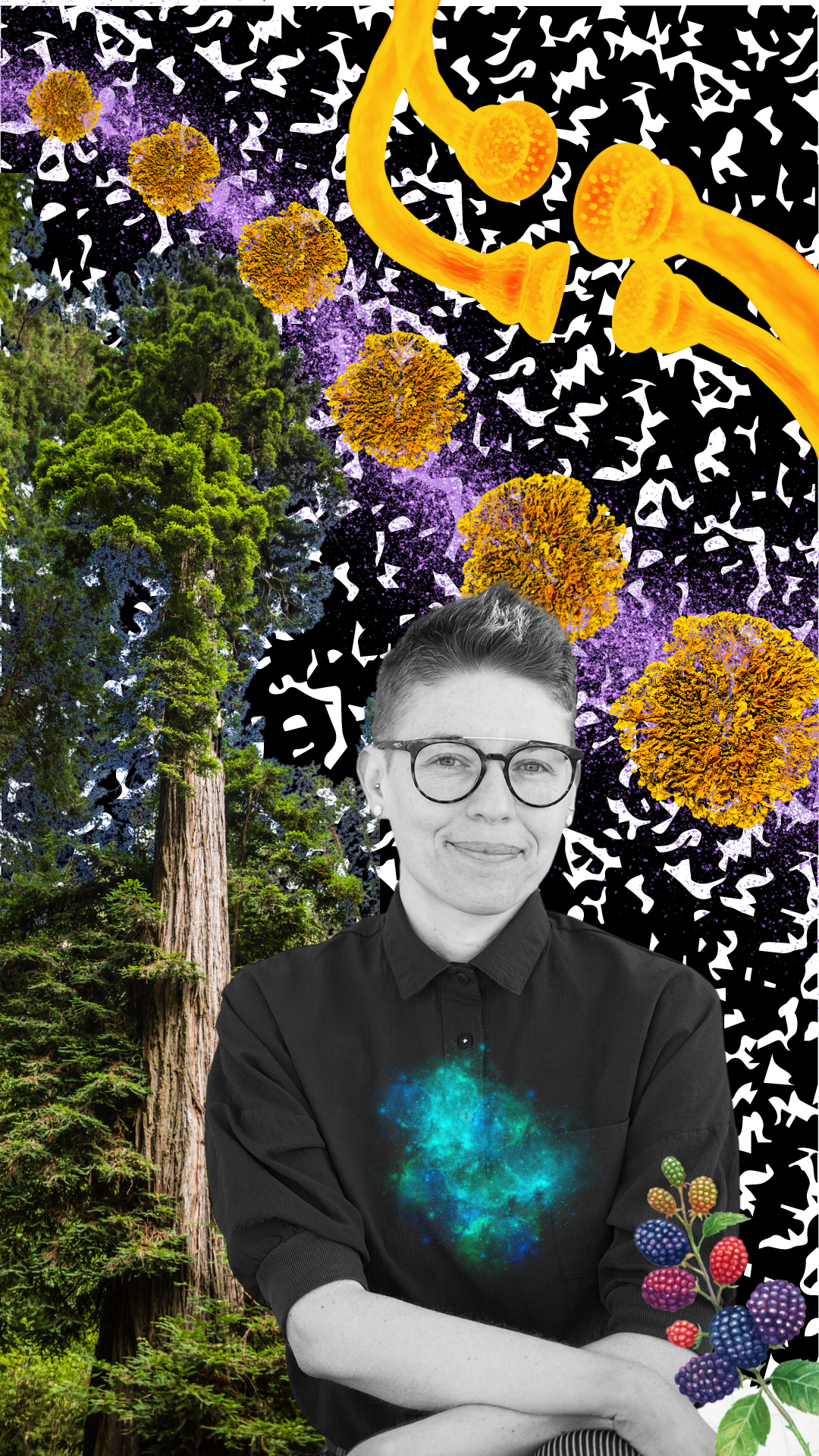
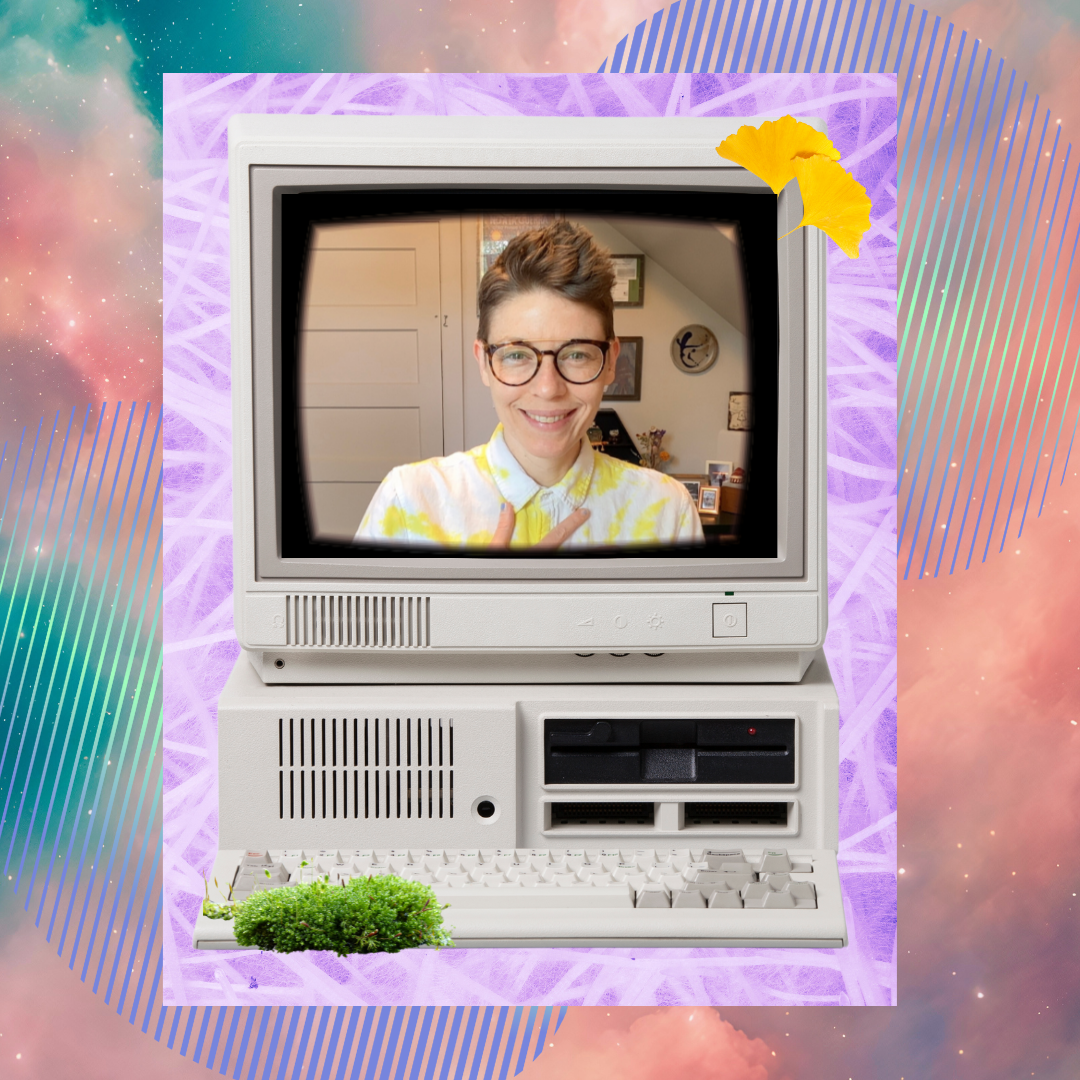
Original photo by Kristen Murakoshi
Training and Experience
IFS Institute Trained in Levels 1 + 2
Additional IFS trainings and/or consultation with specific focus on Transgender and Nonbinary folx, Obsessive Compulsive Systems, Shame and Guilt, Somatic IFS, Sex and Sexuality, Neurodiversity, Eating Disorders and Body Liberation, folx at the Intersection of LGBTQIA+ & BIPOC identities, financial trauma, Complex PTSD, Mindbody symptoms, Embodied Antiracism, and more!
Program Assistant (PA) for Level 1 IFS Training 2022/2023
Queer and Trans IFS (QTIFS) Teaching Assistant 2023 & 2024
Bachelors of Arts with a major in Interdisciplinary Studies: Ethnic Studies & Women’s Studies, magna cum laude, Humboldt State University 2007
Master of Arts with a major in Counseling Psychology and a focus on Somatic Psychotherapy, John F. Kennedy University 2014

Keep scrolling to check out My IFS Experience Timeline below!

My path to Internal Family Systems therapy
“Have you heard of IFS?” she asked. It was 2014 and my friend enthusiastically shared with me that Internal Family Systems therapy had changed her life.
Even though I was nearing the end of my graduate school training, I hadn’t heard of IFS. That was a hectic year for me—I had to finalize my counseling psychology degree, find a job, and move. So, I tucked that moment away, all the while keeping an eye out for something along the lines of “IFS 101” courses.
In 2017, I signed up for “Radical Compassion,” a continuing education class offered by my former graduate school. It was a beautiful sunny Saturday, but I was determined to learn IFS, so I endured the all-too-familiar fluorescent lights and corporate building decor one last time.
I sat near the front of the room and diligently wrote down the definitions of “protectors” and “exiles” in my notebook. As my energy was waning in the late afternoon, the instructor showed us a grainy recording of an IFS session.
In the video, an older white man, a Viet Nam veteran, had his eyes closed as he shared what he was seeing and hearing from his parts. Tears were running down his cheeks as he was describing a younger part of himself. He connected with this younger version of himself, letting him know that he was there with him, that he was not alone. With the man’s compassionate presence, the part released the feelings of guilt and shame that he’d been burdened with for decades.
I was transfixed. The man in the video reminded me of an activist I knew from Veterans for Peace in Humboldt named Brian Willson.
Brian often arrived at the weekly Friday protests on his hand-powered bike. Together with the Women in Black and members of Veterans for Peace, my comrades and I stood in the Arcata Plaza silently protesting against war and occupation.
In 1987, Brian Willson and two other veterans sat on a train track in Concord, California in an effort to stop weapons shipments to Central America. Instead of slow down, the train sped up and he was struck, resulting in life-altering injuries. The Reagan administration labeled Brian a domestic terrorist for taking courageous actions to end unspeakable atrocities.
Echoes of the Viet Nam war also reverberate in my own family. Like many healers, artists, activists, and therapists before me, I’ve felt the terror of exiled suffering.
IFS proposes new ways of tending to our personal, familial, and collective wounds and imparts a steadfast trust in our shared capacity to hold space for profound pain and our seemingly endless complexity.
Of course, individual therapy will not liberate us. Perhaps, though, we can practice interrupting cycles of punishment within our internal and external relationships. Maybe as we show up for our own tender parts we can show up for one another, creating ecosystems of care and belonging.
I left that workshop determined to find a way into an official IFS training. Between 2017 and 2021, when I would be accepted into a Level 1, I did everything I could within my limited budget to learn IFS.
The poisoned roots of our society's institutions— including the mental health field—must be acknowledged if we hope to find ways to transform them.
Psychotherapy, including IFS, is infused with white supremacy, ableism, colonialism, cisheteropatriarchy, individualism, and materialism.
Clinicians from the global majority, LGBTQIA+ folx, and folx at those intersections are evolving the model in meaningful ways.
Natalie Y. Gutiérrez, Kim Paulus, Tasha Hunter, Jessica Finney, Sand Chang, Nic Wildes, and the staff of QTIFS (Queer and Trans Internal Family Systems), in particular, have nourished my hope in IFS is a modality with the potential for profound healing.
My Inspiration and Values
My psychotherapy practice is a collective expression of care and imagination.
In other words, I show up in the way I do because so many other movements, healers, teachers, poets, writers, and visionaries had/have the courage to express their inner wisdom and fight for liberation!
Over the past 20+ years, I’m grateful to have been entangled with visionary movements and creative actions in support of prisoners, biodiversity, sex workers, victims of police violence, immigrants, refugees, poor people, trans liberation, alternatives to policing, homeless folx, young people, Indigenous autonomy, participatory budgeting, survivors of sexual assault, and housing rights.
What follows, in no particular order, is an unintentionally partial reflection of my lineages of influence:
Riot Grrrls of Las Vegas, Octavia E. Butler, Lama Rod Owens, Acción Zapatista de Humboldt/Zapatismo, The Ejército Zapatista de Liberación Nacional (EZLN), Dr. Joy DeGruy, Silvia Federici, Redwood Curtain Copwatch & Petaluma Copwatch, Theater of the Oppressed, Diné Supply Run in Black Mesa Arizona, Shoshone Mother’s Day Anti-Nuclear Action, Nick Walker, Mariame Kaba, Kelly Hayes, Audre Lorde, Grace Lee Boggs, Devon Price, PhD., Bayo Akomolafe.
Get in Touch
I’d love to hear from you!
To schedule your free 30-ish minute phone or video consultation, click the button below.
My IFS Experience Timeline
-
From Fear to Freedom: Using IFS with OCD with Melissa Mose, 20 IFS CE hours
IFS for Adult Children of Emotionally Immature Parents with Lauren Bartholomew, PsyD and Ellen Sharp, PhD: August 29th
Minimizing Uncertainty: How IFS Helps Autistic Clients Thrive with Sarah Bergenfield: June 13th, Cambridge Health Alliance
IFS for OCD Group Consultation with Melissa Mose: April, May, June, July, August
Your Resilient Self: Creative Recovery from Mindbody Symptoms with Susann Suprenant, PhD, GCFP, IFS Practitioner: January-March
Group Consultation with Paul Neustadt: October 2024-January 2025.
Parts Work for Complex Trauma with Laura DeSantis, LPCC: January
-
IFS and Financial Trauma with Rick Kahler: November
Queer and Trans IFS (QTIFS) Fall Cohort Teaching Assistant: September-December
Level 2 Training: Deepening and Expanding with IFS, lead trainer Pamela Krause, IFS Barcelona: January-February
-
IFS Therapy for Shame and Guilt with Martha Sweezy, PhD. November 3
QTIFS Fall Cohort Teaching Assistant: IFS Foundations for Trans, Nonbinary, and Queer Clinicians, September-November
Being with what is Here: Embodied Antiracism and IFS as a groundwork for PAing in a white body with Delta Larkey and Jessica Finney, July 7th
Welcoming Neurodiversity Into Your Practice with Melissa Galbraith and Tara Watters, April 15th and 16th, through IFSCA
Sex and Sexuality Using and IFS Framework with Victoria Kirby: March 13, 20, and 27
Eating Disorders and Body Liberation Focused IFS Consultation Group with Dr. Sand Chang, PhD. on January 30, February 20, April 17, May 15
IFS & OCD Workshop with Melissa Mose, through IFSCA on March 10
Program Assistant for Level 1: September 2022–January 2023
-
Exploring the Survive/Thrive Spiral with Ruth Culver: December 9
IFS and Life Events with Chris Burris: December 2
IFS, Eating Disorders, and Body Liberation with Sand Chang: November 18
IFS and OCD Consultation Group with Melissa Mose: October
Multi-Facets: Using Internal Family Systems Therapy with People at the Intersection of LGBTQIA & BIPOC with Carmen Jimenez-Pride and Kim Paulus: April 16
Leslie Petruk Consultation Group: March 2022–June
Somatic IFS Series, Susan McConnell: 2/1-4/1
-
IFS and OCD, Alessio Rizzo and Robert Fox: November 27th
IFS Level 1 Training with Rina Dubin, Mike Elkin, and Leslie Petruk: October 2021–February 2022
Annual IFS Conference: October 14-16th
IFS and Trans Communities, Sand Chang, PhD, Lance Hicks, LMSW, Sundaura Lithman, LCSW, and Nic Wildes, LMHC: October 7th
-
Annual IFS Conference September 26-27:
Healing Developmental Trauma: Attachment, Intersubjectivity and IFS with Deidre Fay; All Genders Welcome: Applying IFS To Working With Transgender And Nonbinary Clients and Parts with Sand Chang and Kim Paulus; and The Communicating Body in IFS with Brenda Aufderhar
-
Intro to Internal Family Systems: A Workshop with Richard Schwartz, California Institute for Integral Studies: February 10-11
-
Radical Compassion:
Introduction to Internal Family Systems Therapy (IFS), John F. Kennedy University Continuing Education: July 29th

